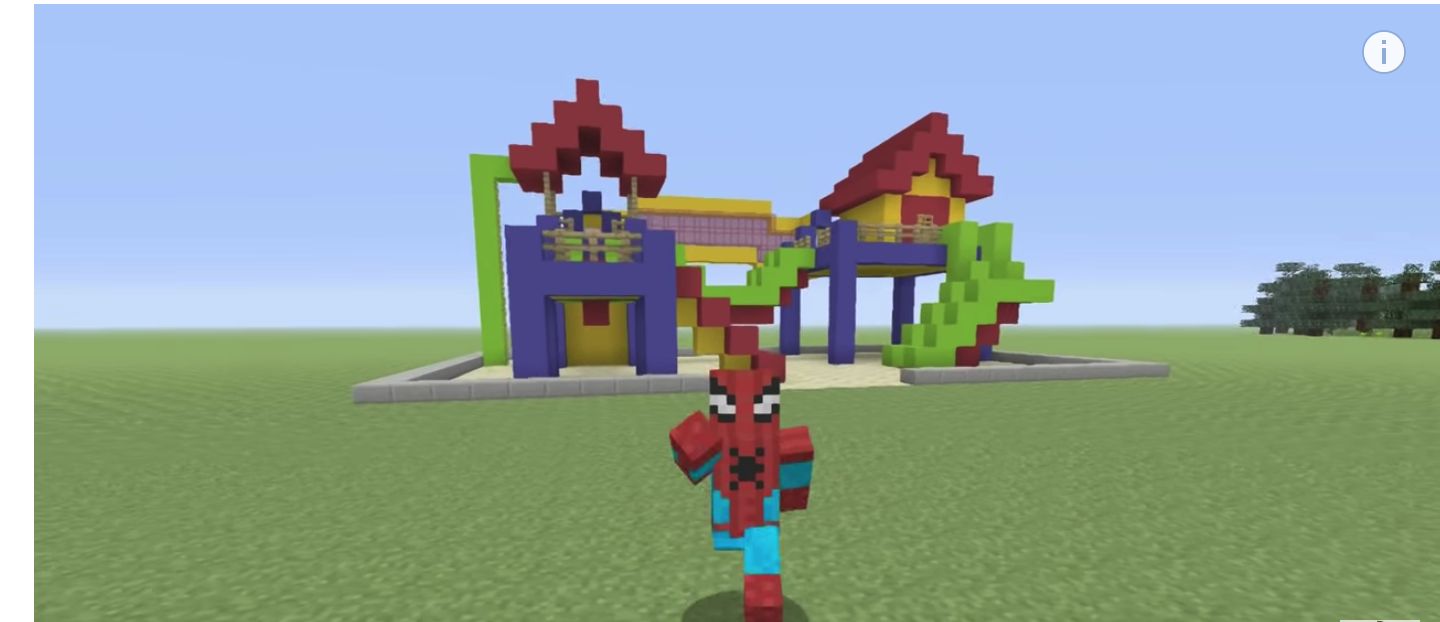
Minecraft is a game where students choose to be in different landscapes and can choose creative or survival mode to explore the virtual-world to gather resources (Zaidi 2016). Students can explore materials, create houses or building, expressing creativity as well as problem-solving when encountering a problem. Not only this, but Minecraft and other games promote student collaboration through the facing of problems which students must work through together in order to find a solution. Thomas and Brown (2007) discuss how games-based learning has provided a new and unusual space for learning through taking on different worlds.
Kuhn and Stevens (2017 p. 753) state that video games are no longer just physical software but rather a new “culture”. Video games have been seen to improve learning focus in the classroom, as well as students engagement, motivation and learning of academic content. While video games do engage students, the question of alignment across the subjects syllabuses is often posed, especially as older teachers struggle with keeping up with technology and making them relevant and educational to students.
Minecraft seems to solve some of these issues, as it is reasonably accessible and has many affordances which make it relevant to many subjects within the curriculum. For example, in the subject of stage 3 history (NESA 2016), as students learn about colonisation and immigration, students can create an environment, much like Australia before Captain Cook arrived and then show the change when Australia was colonised through the resources on Minecraft. While the virtual world may seem confusing for some teachers, Zaidi (2016) suggests that educators should experience the game themselves before teaching and setting tasks for students. As well as this, while the transmission approach is used widely through classrooms, Zaidi (2016) suggests that the game loses its novelty when teachers hold tight control rather than allowing students to express their creativity through using online games.
References:
- Arnab, S. et al. 2012. Framing the Adoption of Serious Games in Formal Education, Electronic Journal of E-learning, 10(2), 159-171.
- Gee, J.P. 2005. Good Video Games and Good Learning, Phi Kappa Phi Forum, 85(2), 32-37.
- Kuhn, J. & Stevens, V. 2017. Participatory culture as professional development: Preparing teachers to use Minecraft in the classroom, TESOL, Vol.8, pp. 753-766.
- NSW Education Standards Authority. 2012. History K-10 Syllabus, pp.14-23.
- Thomas, D. Brown, J.S. 2007. The play of Imagination: Extending the Literary Mind, Games and Culture, 2(149).
- Zaida, S. 2016. Minecraft in the classroom, TEACH Le Prof, March/April, p.9-12.

 Grace's Blog